EN
 NL
 DE
 FR
Elafonissi Beach, Crete: How to Get There, Parking & Visitor Guide
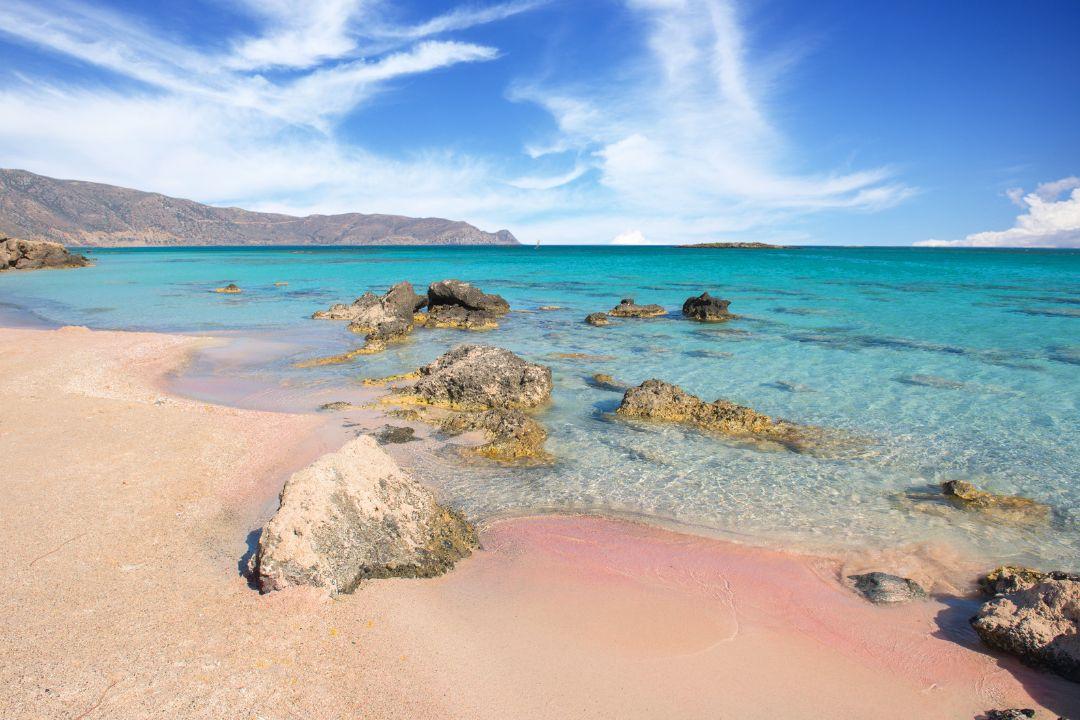
Elafonissi Beach is one of Crete’s most famous natural attractions, known for its pink-tinged sand, crystal-clear turquoise waters and shallow lagoon. Located on the island’s southwestern coast, approximately 75 km from Chania, it is a popular destination for swimming, photography and day trips through western Crete.
The drive from Chania to Elafonissi takes around 1 hour and 45 minutes. The main access road is paved, making the beach accessible with a standard rental car. Along the way, you’ll pass traditional villages, olive groves and mountain landscapes before reaching the coast. If you’re planning to rent a car in Crete, Elafonissi is an excellent destination to explore independently. This guide covers the driving routes, road conditions, parking, facilities and best visiting times, so you can plan your trip with confidence.
Elafonissi Beach at a Glance
| Planning detail | What to know |
|---|---|
| Location | Southwest Crete, Chania region |
| Distance from Chania | Approximately 75–80 km |
| Drive from Chania | Around 1 hr 45 min; allow up to 2 hrs |
| Road conditions | Paved main route with mountain bends |
| Parking | Designated parking areas; fees may apply |
| Best period | May–June and September–early October |
| Best arrival time | Before 9:00 AM in peak season |
| Suitable rental car | Small, medium or SUV |
| Best for | Swimming, families, nature and photography |
Table of Contents
- Why Elafonissi is famous
- How to get there by car
- Parking, entrance and facilities
- Best time to visit
- Places to visit nearby
- Choosing a rental car
- Frequently asked questions
Why Is Elafonissi Beach Famous?
Elafonissi stands out for three natural features: its distinctive pink sand, the shallow turquoise lagoon connecting the mainland to a small islet, and its protected coastal landscape.
The Pink Sand of Elafonissi
Elafonissi’s famous pink sand gets its colour from tiny fragments of shells and marine organisms mixed with the pale sand. These fragments create delicate pink shades, particularly along sections of the shoreline.
However, Elafonissi is not entirely pink. The colour varies depending on lighting, sea conditions and the concentration of shell fragments. Some sections appear almost white, while others have noticeable pink patches.
For the best experience:
- Explore different parts of the shoreline, as the pink colour isn’t evenly distributed.
- Visit in the morning or late afternoon for softer photographic lighting.
- Leave sand and shells where they are to help preserve the protected environment.
The Shallow Lagoon and Small Islet
A sandy stretch separates the mainland from a small islet, forming a lagoon with shallow, clear turquoise water. In calm conditions, visitors can wade through parts of the lagoon and explore quieter areas beyond the main beach. The gently sloping sandy areas make Elafonissi particularly popular with families. However, water depth and currents change with the weather, so children should always be supervised, especially near deeper channels.
A Protected Natura 2000 Area
Elafonissi is part of the European Natura 2000 network, which protects important coastal habitats and wildlife. The surrounding dunes support sensitive vegetation, including sea daffodils and juniper species. To help preserve the area, visitors should remain on designated paths, avoid disturbing the dunes and never remove sand, shells or plants.
How to Get to Elafonissi Beach by Car
Elafonissi Beach is located on Crete’s southwestern coast, within the Chania regional unit, facing the Libyan Sea. Chania is the most convenient starting point, although the beach can also be reached from Kissamos, Rethymno and Heraklion.
| Starting point | Approximate driving time | Day-trip suitability |
|---|---|---|
| Chania city | 1 hr 30 min–2 hrs | Ideal |
| Chania Airport | Around 2 hrs | Ideal |
| Kissamos | 1–1.5 hrs | Ideal |
| Rethymno | 2.5–3 hrs | Manageable with an early start |
| Heraklion | 3–4 hrs | Long day trip |
Driving times are estimates and may vary according to traffic, road conditions and stops.
There are two main driving routes from Chania to Elafonissi. The inland route through Topolia and Elos is recommended for most visitors, while the western route through Kissamos and Sfinari is a longer, more winding alternative for confident drivers.
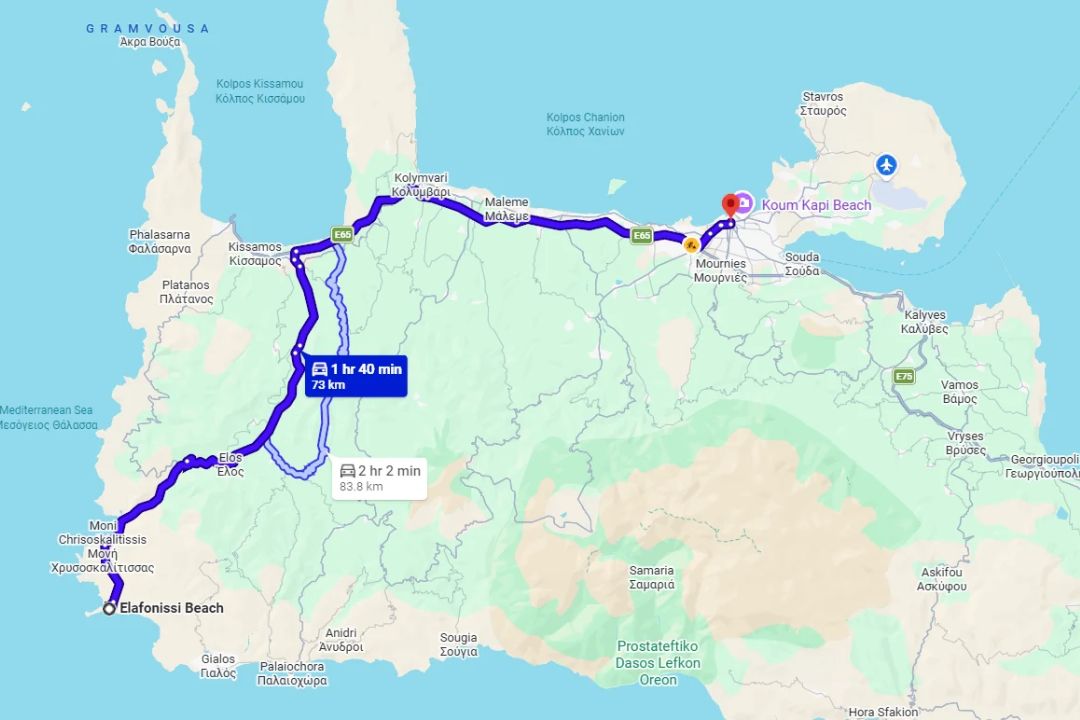
Chania to Elafonissi via Topolia Gorge and Elos
From Chania, follow the northern highway west towards Kissamos before turning inland near Kaloudiana. Continue towards Topolia and Elos, following signs for Chrysoskalitissa Monastery and Elafonissi. The route passes through traditional villages, mountainous countryside and Topolia Gorge.
Recommended for: Families, first-time visitors and drivers looking for the most practical route.
Estimated driving time: Approximately 1 hour and 45 minutes from Chania.
Chania to Elafonissi via Kissamos and Sfinari
The alternative route travels through Kissamos, Sfinari, Kampos and Amygdalokefali before continuing towards Elafonissi. It offers views of Crete’s western coastline and passes through quieter mountain villages. However, the road is generally narrower and more winding than the inland route, with steep gradients and limited visibility in some sections.
Recommended for: Confident drivers who prefer a longer, scenic route.
Estimated driving time: Two hours or more from Chania.
Tip: If you’re comfortable with mountain driving, you can travel to Elafonissi via Topolia and return through Sfinari, provided you have enough daylight.
Elafonissi Road Conditions & Driving Safety
The main road to Elafonissi is paved and suitable for standard passenger cars. You don’t need an SUV or 4x4, and the journey doesn’t require off-road driving. However, some sections include sharp mountain bends, changes in elevation and limited visibility. Drivers unfamiliar with Crete’s rural roads should take extra care, particularly during the busy summer months.
Tips for driving to Elafonissi:
- Choose the Topolia–Elos route: Generally the most practical option for first-time visitors.
- Drive cautiously around bends: Some sections have limited visibility and narrow lanes.
- Allow space for buses: Larger vehicles may need additional room on winding roads.
- Check navigation updates: Follow current road signs, particularly around recently modified sections.
- Allow extra travel time: Traffic and sightseeing stops can extend the journey.
- Plan your return: Travel before dark if you’re uncomfortable driving mountain roads at night.
For additional advice about mountain roads, local driving conditions and navigation, read Motor Plan’s guide to driving safely in Crete.
Elafonissi Beach Parking, Entrance & Facilities
Here is what you should know regarding parking, entrance and facilities:
Parking at Elafonissi Beach
Parking at Elafonissi Beach is available in designated areas outside the protected coastal zone. Visitors must leave their vehicles in these areas and continue to the beach on foot, as driving or parking directly on the sand and protected dunes is prohibited. Parking fees vary between facilities, and some private parking areas charge a daily fee. Depending on where you park, allow approximately 10–15 minutes to walk to the beach, potentially longer from more distant areas.
During July and August, parking areas can become crowded, particularly when organised day trips arrive.
Parking tips:
- Arrive before 9:00 AM during peak season.
- Follow signs for designated parking areas.
- Check parking fees before leaving your vehicle.
- Do not park on protected dunes or restricted access roads.
- Allow extra walking time if travelling with children or carrying beach equipment.
Entrance Fees & Beach Access
Elafonissi Beach is free to enter, with no general admission ticket required to access the shoreline or lagoon. Visitors can swim, relax on the sand and explore permitted coastal areas without paying an entrance fee. Optional services such as parking, sunbeds and umbrellas may involve additional charges. As Elafonissi is a protected Natura 2000 area, access to sensitive dunes and vegetation is restricted. Always follow designated paths and local signs.
Facilities at Elafonissi Beach
Elafonissi offers basic visitor facilities near its main organised beach area, particularly during the tourist season.
| Facility | Availability |
|---|---|
| Sunbeds & umbrellas | Seasonal, available for a fee |
| Toilets | Near main visitor areas |
| Snack bars & refreshments | Primarily during tourist season |
| Natural shade | Limited |
| Unorganised beach areas | Available |
| Lifeguard services | Seasonal; check locally |
Visitors can use the unorganised sections of the beach with their own towels and equipment without renting sunbeds.
What to bring to Elafonissi Beach:
- Drinking water and snacks.
- High-SPF sunscreen and a hat.
- An umbrella for shade.
- Towels and swimming essentials.
- Comfortable footwear for walking.
- A waterproof bag if you plan to wade through the lagoon.
Facilities become more limited farther from the organised sections, so bring everything you’ll need for several hours at the beach.
Best Time to Visit Elafonissi Beach
May, June, September and early October generally offer a better balance of beach weather and smaller crowds. July and August are hotter and busier, with more demand for parking and sunbeds. In spring or autumn, swimming comfort and facilities depend on the day’s weather.
| Period | Typical experience | Best approach |
|---|---|---|
| April–May | Quieter; sea can be cool | Sightseeing and photography |
| June | Warmer, before peak crowds | Full beach day |
| July–August | Busiest and hottest | Arrive before 9:00 AM |
| September | Often warm with fewer visitors | Strong all-round choice |
| October | Variable weather; fewer services | Check wind and forecast |
| November–March | Cooler, largely unorganised | Coastal walk on a suitable day |
Info: Travelling in autumn? Motor Plan’s Crete in October guide covers seasonal beach and driving considerations.
Places to Visit Near Elafonissi Beach
Elafonissi can be combined with other attractions in southwestern Crete. Some are convenient stops along the same route, while others are better planned as separate excursions.
| Destination | Why visit | Planning advice |
|---|---|---|
| Kedrodasos Beach | Quieter beach with juniper woodland | Requires walking; limited facilities |
| Chrysoskalitissa Monastery | Historic monastery with coastal views | Convenient stop near Elafonissi |
| Paleochora | Traditional coastal town and beaches | Better as a separate day trip |
| Falassarna Beach | Wide sandy coastline and sunsets | Best visited on another day |
Kedrodasos Beach
Kedrodasos lies east of Elafonissi and is known for its natural landscape, turquoise water and protected juniper woodland. Unlike Elafonissi, it has very limited visitor facilities, making it a quieter alternative for travellers who prefer less developed beaches. Access involves walking along uneven trails, while a separate approach includes a rough dirt track. A coastal walking route from the Elafonissi area is another possibility for visitors comfortable with uneven terrain.
Chrysoskalitissa Monastery
Located approximately 5 km from Elafonissi, Chrysoskalitissa Monastery is a convenient stop along the main driving route. Built on a rocky elevation overlooking the sea, it offers coastal views and an opportunity to discover the area’s religious heritage. Its location makes it easy to include before reaching Elafonissi or on your return journey. Allow time for a short visit and follow any dress requirements when entering the monastery.
Paleochora & Falassarna Beach
Paleochora is a traditional coastal town in southern Crete, known for its waterfront tavernas and nearby beaches. However, there is no short, direct coastal road connecting it with Elafonissi, so it is generally better planned as a separate day trip. For another beach destination in western Crete, consider Falassarna Beach, known for its wide sandy coastline and sunset views. Visiting Falassarna and Elafonissi on separate days allows more time to enjoy each location.
Info: For travellers planning several coastal excursions, Motor Plan’s guide to the best beaches in Crete provides further ideas for exploring the island.
Which Rental Car Is Best for Visiting Elafonissi?
A small or medium rental car is suitable for the drive to Elafonissi. The main access road is paved, so vehicle choice should depend on passenger numbers, luggage requirements and comfort rather than off-road capability.
| Vehicle type | Best for | Main advantage |
|---|---|---|
| Small car | Couples, solo travellers | Fuel efficiency and easy manoeuvring |
| Medium car | Families, small groups | Additional comfort and luggage space |
| SUV or crossover | Travellers needing more room | Higher seating position and luggage capacity |
Rent a Car at Chania Airport for Your Elafonissi Trip
If you’re flying into Chania, you can pick up your rental car at Chania Airport and start exploring western Crete straight away. Having your own car means you can visit Elafonissi whenever you like, stop at villages along the way and enjoy the beach without following an organised tour schedule.
With Motor Plan, your rental comes with several benefits:
- Full insurance with zero excess, subject to rental terms.
- Unlimited kilometres to explore Crete at your own pace.
- No security deposit required.
- 24-hour roadside assistance across Crete.
- Free cancellation up to 48 hours before arrival.
All benefits are subject to the applicable booking and insurance conditions.
For the drive to Elafonissi, a small or medium car is all you need, as the main route is paved. The journey from Chania Airport takes around two hours, depending on traffic and road conditions.
Frequently Asked Questions About Elafonissi Beach
Is Elafonissi Beach Suitable for Children?
Yes. Shallow sandy sections make it popular with families, but shallow water is not automatically safe. Supervise children, check wind and currents, and bring shade and water because exposed areas can get very hot.
Can You Drive Right to Elafonissi Beach?
You can drive to designated parking areas, not onto the sand or protected dunes. Expect a walk from the car park and follow the marked pedestrian access route.
Is Elafonissi Parking Free?
Do not assume so. Some parking areas charge a daily fee; confirm the amount locally. The beach itself has no general admission charge.
Is the Road to Elafonissi Dangerous?
The paved inland route is manageable for experienced drivers in ordinary conditions. It has mountain bends and narrow sections, so reduce speed, allow passing room and avoid driving after dark if you feel uncomfortable.
How Long Should You Spend at Elafonissi?
Allow three to four hours on the beach if you want time to swim, walk around permitted sections of the lagoon and relax without rushing. Add roughly four hours for the return drive from Chania, plus parking and any stops.